Hello Wine: A Designer’s Review for Business Branding
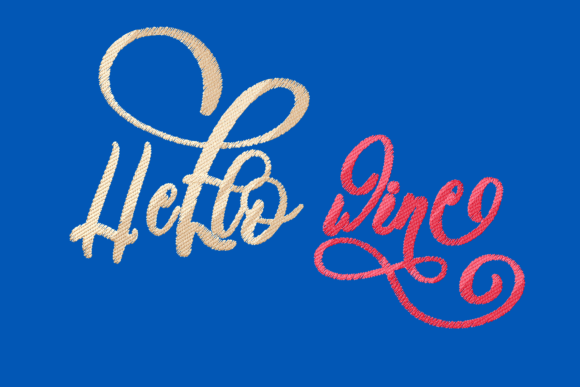
As an embroidery designer who works daily with small businesses and craft entrepreneurs, I often evaluate digital embroidery files not just for their beauty, but for their real-world commercial potential. Today, I’m reviewing Hello Wine, an embroidery design described as "stunning" and "perfect for a machine embroidery design, especially for a crafter," with its key feature being multiple embroidery file formats. This is a crucial starting point for professional use.
First Impression: Friendly Elegance for a Craft Business
The name Hello Wine immediately suggests a blend of approachability and sophistication. It feels friendly and inviting, not overly formal or corporate. For a boutique, a creative studio, a local café, or a handmade wine-related product brand, this design could strike the perfect tone. It leans towards a modern, perhaps slightly rustic elegance, making it suitable for businesses that want to feel premium yet warmly handmade. It’s decorative, yes, but with a clear commercial personality that can translate into a recognizable brand mark.
Real Business Applications: Beyond Decoration
The true value of an embroidery design like Hello Wine lies in its versatility across small business merchandise. Having multiple embroidery file formats is a significant advantage, as it allows for adaptation to different machines and projects. Let’s explore specific applications.
Embroidered Patches & Product Labels
For a pet brand, bakery, or florist creating handmade goods, a custom embroidered patch featuring Hello Wine can serve as a beautiful product label sewn onto tote bags, aprons, or packaging. It elevates a simple item into a branded, finished product. As a standalone patch, it can be applied to denim jackets, hats, or bags as event merch or customer gifts, creating a tangible piece of brand loyalty.
Staff Uniforms & Professional Apparel
Imagine a small wine bar or a café with staff uniforms. Hello Wine embroidered on the chest of a polo shirt or as a sleeve detail on a work shirt injects professionalism and cohesive brand identity. Embroidered on an apron, it transforms a functional item into a branded uniform that builds customer trust and visual consistency. For a creative studio, it could be a subtle accent on a tote bag used for client meetings.
Cap Embroidery & Promotional Merch
A cap featuring this design becomes a powerful piece of promotional merchandise for a small business. It’s wearable branding. Similarly, for an Etsy seller or a craft business, a tote bag with Hello Wine cleanly embroidered acts as both a practical product and a walking advertisement. These items increase brand recognition and can directly engage buyers.
Where to Use With Care: Practical Designer Notes
While the design’s potential is broad, successful execution requires careful planning. These are my professional notes for using Hello Wine in commercial embroidery projects.
- Scale & Detail: Always test the design at a small patch size first. If the design includes tiny lettering or intricate details, scaling it down for a cap front or a small product label might cause loss of clarity. Check the spacing and outlines in your software preview.
- Stitch Density & Fabric: Assess the stitch density. High density can be challenging on lightweight fabrics or curved surfaces like caps. Always use the proper stabilizer and test on real fabric—a sample apron, cap, or work shirt material—before full production.
- Color & Contrast: For versatility, I recommend testing Hello Wine in monochrome first—black thread on white fabric and white thread on dark uniforms. This checks its fundamental silhouette and ensures it works in high-contrast scenarios essential for brand consistency.
- Hoop Size & Stabilizer: Confirm the required hoop size for your intended application. A design meant for a tote bag might need a larger hoop than one for a cap. This information is typically part of the embroidery file details, so check the provided specifications.
- Client Presentation: Before stitching a final product, create a printable mockup for client approval. Place the design on digital images of caps, shirts, and bags. This helps compare it beside other design assets and ensures it aligns with the overall brand identity.
- Commercial Licensing: Crucially, confirm the commercial licensing terms for this digital embroidery file before any business use. The description mentions it’s perfect for a crafter, but professional production for sale requires clear commercial rights.
Building Brand Identity & Customer Engagement
Ultimately, a design like Hello Wine is more than stitches; it’s a brand asset. When consistently applied to uniforms, merchandise, and product labels, it builds a visual identity that customers remember. It suggests a commitment to quality and craftsmanship, enhancing the perceived value of your handmade products or services. On custom apparel, it fosters a sense of community among staff and clients. For a small business, this engagement is invaluable.
A Final Word for Merch Creators
Hello Wine, with its multiple file formats and crafted appeal, presents a solid opportunity for small business branding through embroidery. Its friendly elegance fits a range of niches. My strongest advice is to approach it as a professional component of your brand system. Test it thoroughly on the actual items you plan to produce, ensure the technical details align with your equipment, and always secure the proper license. Done correctly, this machine embroidery design can become a beautiful, enduring mark of your business on patches, apparel, and merchandise, helping you stand out in a crowded, creative marketplace.