A Designer's Take on the Cow Head Applique for Real Projects
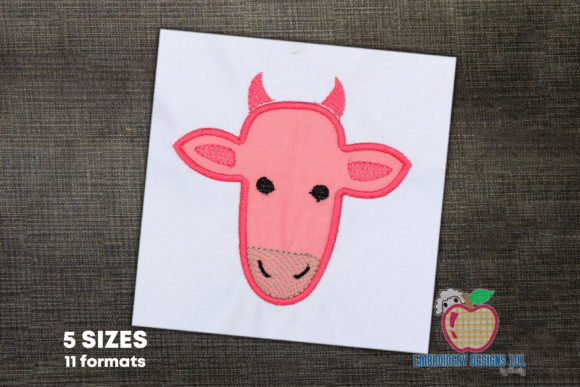
When a new embroidery file lands in my library, my first question isn’t about the technical specs. It’s about the story it tells. The Cow Head Applique design, squarely in the Farm Animals category, immediately conjures a specific, charming mood. It’s friendly, approachable, and carries a quiet sense of rural warmth. The shape is classic and instantly recognizable—a silhouette filled with enough detail to feel lively, not cartoonish. This isn’t an overly complex piece; it’s an applique design with a clear, confident personality. It feels like it belongs on items meant for everyday use or heartfelt gifts, not on formal, delicate pieces. You can picture it on a child’s item or a cozy kitchen accessory almost instinctively.
The Perfect Project Fit: Where This Cow Really Belongs
I’m thinking through my current project queue. A client wants a personalized baby gift set. Another is stocking her small shop with autumn-themed tote bag designs. A local farm is looking for branded caps for staff. In each scenario, this Cow Head Applique slots in beautifully. For the baby item—perhaps a blanket or a little sweatshirt—the design offers a gentle, animal-themed touch without being overwhelming. Stitched onto a natural-colored canvas tote, it becomes a statement piece for a craft business, suggesting simplicity and rustic charm. On a cotton cap, its clear silhouette ensures it remains legible even on a curved surface.
Its true strength lies in custom apparel and home goods. Imagine it centered on an apron for a gardening enthusiast, or as a repeated motif on a set of linen tea towels for a holiday housewarming gift. For Etsy sellers and creative entrepreneurs, this design translates easily into printable mockups for digital product previews, showing customers exactly the handmade presentation they’ll receive. It has that giftability factor—it feels personal and specific without being overly niche.
Navigating the Stitching: Practical Performance Notes
Moving from theory to the machine, the practicalities come front of mind. The product description notes multiple embroidery file formats and color-change separation, which is a good starting point for machine embroidery compatibility. However, the real test is on fabric. Given it’s an applique design, the core shapes will be defined by satin stitch borders and fill stitch areas for the applique pieces themselves. This means stitch density and hoop size are crucial considerations.
My advice? Test the design on scrap fabric first. Always. Use the same fabric texture you intend for the final project—whether it’s a thick sweatshirt fleece or a smooth cotton for a pillow cover. Pay close attention to the small details, like the corners of the ears or the outline of the muzzle. These areas need clean stitching to maintain the design’s friendly character. Check thread color contrast meticulously. A light brown applique on a cream background might lose definition, while on a dark denim tote bag, it could pop beautifully. This design likely thrives on contrast.
Careful Application: When to Hesitate
Not every design is for every surface. The Cow Head Applique should be used carefully on very small hoop sizes. If the design is scaled down too much, the applique pieces and the satin stitch outlines could become overly dense and puckered, especially on thin fabric or stretchy fabric. Similarly, textured fabrics like some towels might require extra stabilizer to keep those clean lines.
I’d also be mindful of products that need frequent washing. While a well-stitched design with proper stabilizer should hold up, the longevity on something like a child’s heavily-washed sweatshirt depends entirely on your embroidery technique and material choices. For dark fabric, you’ll need to ensure your applique fabric is sufficiently light and opaque to stand out. And for curved surfaces like caps, consider a test run to see how the design’s layout adapts to the shape.
Why It Works: The Value Beyond the Stitches
What makes a design like this a reliable commercial embroidery asset or a trusted part of your hobby project library? It’s the clarity. When a customer sees this cow on a finished product, they recognize it immediately. That visual appeal translates directly into perceived product value. For a small shop product, it contributes to brand consistency if you’re building a rustic, farm, or wholesome theme. It looks professional and intentional.
This builds customer trust. A clean, well-executed applique suggests care and skill. It elevates a simple embroidered patch or baby embroidery item from a cute craft to a thoughtful personalized gift. For the maker, it’s a straightforward design to produce reliably, which means you can confidently list it in your Etsy listings or prepare it for craft fair products without worrying about inconsistent results.
Final Designer’s Checklist Before You Hoop
Before I commit this design to a client’s order or my own boutique merchandise, my internal checklist runs through a few key points:
- Run the file on scrap fabric matching my final project’s weight and texture.
- Compare how it looks on both light and dark fabric backgrounds in real stitches, not just on screen.
- Inspect the small details after stitching—are they crisp?
- Confirm the effective minimum hoop size for my desired finished size.
- Use, and perhaps test, the proper stabilizer for my chosen application.
- Check the licensing terms associated with the design file to confirm it’s suitable for my intended use, whether for personal projects or commercial finished items.
- Consider creating a black and white mockup to see the pure shape, free from color influence.
The Cow Head Applique isn’t a flashy, trend-driven design. It’s a solid, charming, and versatile embroidery project foundation. From a designer’s perspective, that’s often exactly what you need: a reliable design asset that you can trust to look good, stitch well, and resonate with the people who ultimately receive or purchase the finished product. It’s a design that does its job with a smile, and that’s a valuable thing to have in your toolkit.